
Yes, an organic spray tan makes a real difference, but the difference is in the ingredients around the tan, not the tan itself. The agent that creates your color, DHA, is the same in organic and regular solutions. What changes is everything else in the bottle: organic formulas skip the synthetic fragrances, parabens, and harsh preservatives behind most of the irritation, lingering chemical smell, and sticky residue people blame on a bad spray tan.
That distinction matters most if you have sensitive skin, react to fragrance, or prefer cleaner products. Below is what “organic” actually means in spray tanning, how the solutions compare, and what to ask before you book.
Key Takeaways
- For color or how long it lasts, organic offers no real edge over a quality regular solution. Its advantage is gentler ingredients, not a better tan.
- “Organic” is not a regulated term in spray tanning, so the label alone guarantees nothing. Ask the salon what is actually in their solution before you book.
- A good organic formula avoids synthetic fragrance and heavy preservatives, and that is what cuts the chemical smell and the sticky transfer, not the word “organic” on its own.
- Your prep and aftercare drive the result more than the formula does, so the prep steps matter no matter which solution you pick.
- At SunsUp, the active comes from beet-derived DHA with no parabens, sulfates, or synthetic fragrance, which is the kind of specific worth confirming at any salon.
What Is an Organic Spray Tan?
An organic spray tan is a sunless tan applied with a solution built from naturally derived ingredients rather than synthetic ones. The active ingredient, DHA, reacts with the surface of your skin to create color, and in an organic solution that DHA is plant-based, typically from organic sugar beet or cane.
One thing worth knowing: “organic” carries no certified standard in spray tanning the way it does in food. No agency audits these solutions, so quality varies from one product to the next, and the same DHA that colors your skin is also the active in regular solutions. The honest difference is not the tan, it is what the formula leaves out. That is why a vague “organic” claim tells you less than a clear ingredient list.
An organic solution tends to suit you if you:
- Have sensitive skin or react to products easily.
- Break out or get irritated from fragrances and preservatives.
- Prefer to keep synthetic ingredients off your skin.
If any of those apply, tell your technician before your session so they can match the solution and depth to your skin. At SunsUp Tan & Wellness Spa, the team can walk you through what is in the beet-based formula and what to expect.
Still, if you’re pregnant, check out what’s safe and what isn’t (the secret is not to inhale it).
Organic vs Regular Spray Tan Solution
Here is how the two compare on the things you actually notice:
| Factor | Organic Solution | Regular Solution |
|---|---|---|
| Active ingredient | Plant-derived DHA, often from sugar beet or cane | DHA, frequently synthetic |
| Other ingredients | Usually free of parabens, sulfates, and synthetic dyes | Often includes preservatives and additives that can dry or irritate skin |
| Smell | Light to none, with no lingering “fake tan” scent | Often a strong chemical or perfume scent that lasts |
| Color result | Soft, even tone that adapts to your undertone, with less risk of orange | Can oxidize unevenly on fair skin if the formula is old or cheap |
| Skin feel | Lighter, less sticky residue, so less transfer to clothes and sheets | Heavier residue, more likely to transfer |
| How long it lasts | About 5 to 7 days | About 5 to 7 days |
The pattern is consistent: color and longevity land in the same range, while the organic formula wins on smell, skin feel, and how gentle it is. For a day like your wedding, that gentler, lower-residue finish is the reason many people book organic.
Organic Spray Tan in the Portland and Vancouver Metro Area
SunsUp Tan & Wellness Spa uses a natural, beet-based solution built for a smooth, believable glow without the chemical smell or the orange cast. If you are in the Portland or Vancouver metro area, you can book at one of our locations.
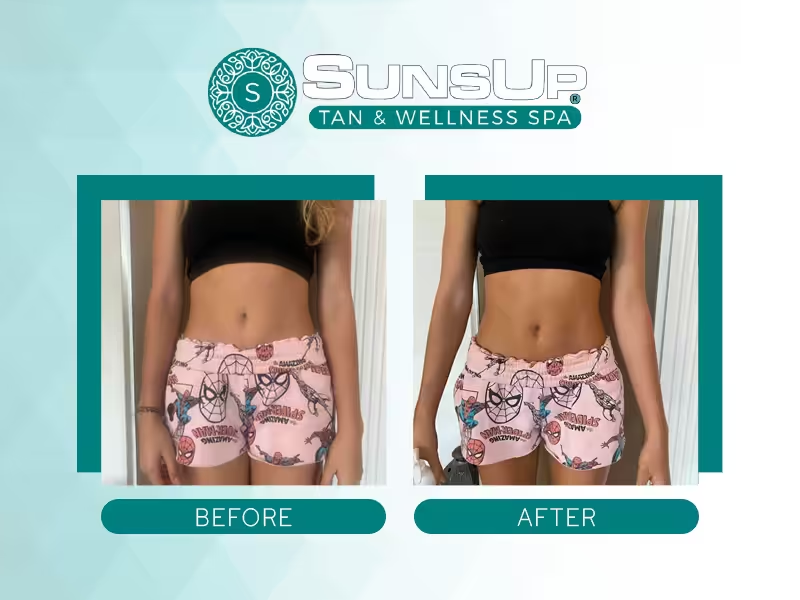
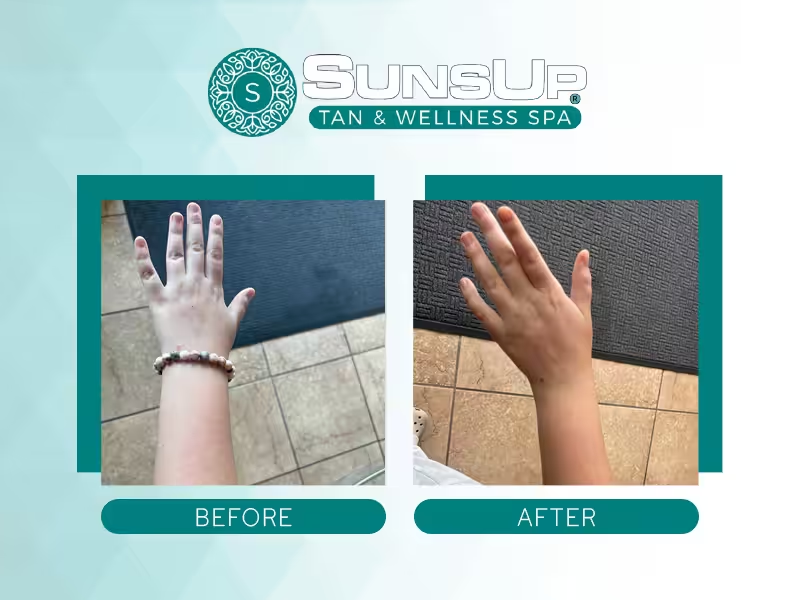
Organic Spray Tan Before and After at SunsUp Tan & Wellness Spa
Here is what an organic spray tan looks like on real clients at SunsUp.
FAQs
What Is Organic Spray Tan Made Of?
The core ingredient is DHA (dihydroxyacetone), a sugar that reacts with the top layer of your skin to create color. In an organic solution the DHA is plant-derived, usually from sugar beet or cane, and the rest of the formula leaves out parabens, sulfates, synthetic dyes, and artificial fragrance. Many also add skin conditioners such as aloe or vitamin E.
What Chemicals Are in a Spray Tan?
Every spray tan, organic or not, relies on DHA for color. Beyond that, a regular solution can carry preservatives, synthetic fragrance, and dyes, while an organic one is formulated to skip most of those. If a specific ingredient worries you, ask the salon for the full list before booking.
Is Organic Spray Tanning Safe?
DHA is approved for external use in sunless tanning products, and an organic formula lowers the chance of irritation by leaving out harsh additives. The usual precautions still apply: keep the solution out of your eyes, mouth, and lungs, which your technician manages with protective steps during the session.
How Long Does an Organic Spray Tan Last?
An organic spray tan usually lasts 5 to 7 days. How well you prep beforehand and care for your skin afterward affects this more than the solution itself does.
Do I Need to Prep My Skin Differently for an Organic Spray Tan?
No, the prep is the same as for any spray tan. Exfoliate, skip lotion and deodorant, and arrive with clean, dry skin. You can follow the full spray tan prep guide for the best result.
Recent Comments