To use a stand up tanning bed, put on the goggles the salon provides, step in and stand in the center with your feet about shoulder-width apart, grip the handlebars with your arms slightly raised, and hold that position while the timer runs for the length set at your consultation, usually 3 to 12 minutes based on your skin type. Because you are standing, the UV light reaches your whole body evenly, so your stance is what decides whether the tan comes out smooth or patchy.
Key Takeaways
- Stand-up beds use stronger 160 to 200-watt lamps, against roughly 100 to 120 watts in a lay-down bed, so sessions are shorter: about 8 to 12 minutes, or 3 to 4 for a first visit.
- They cover the spots a lay-down bed misses, the underarms, inner thighs, and sides of your body, because nothing presses against your skin. Your legs tan slowest, since your feet sit farthest from the lamps.
- A stand-up bed suits you if you have back pain, dislike lying in an enclosed bed, or want a fast in-and-out session. It is a weaker fit if you want to relax or need a built-in facial tanning unit, which most vertical booths lack.
- Eye protection is required by law, and closing your eyes is not enough, because eyelids are too thin to block UV. Salons hand out goggles at no charge.
- Very fair skin that burns easily (Type I) should skip UV altogether and choose a spray tan instead.
- Turning or repositioning once, about halfway through, evens out the areas that lag behind: the inner legs and the sides.
What Is a Stand Up Tanning Bed?
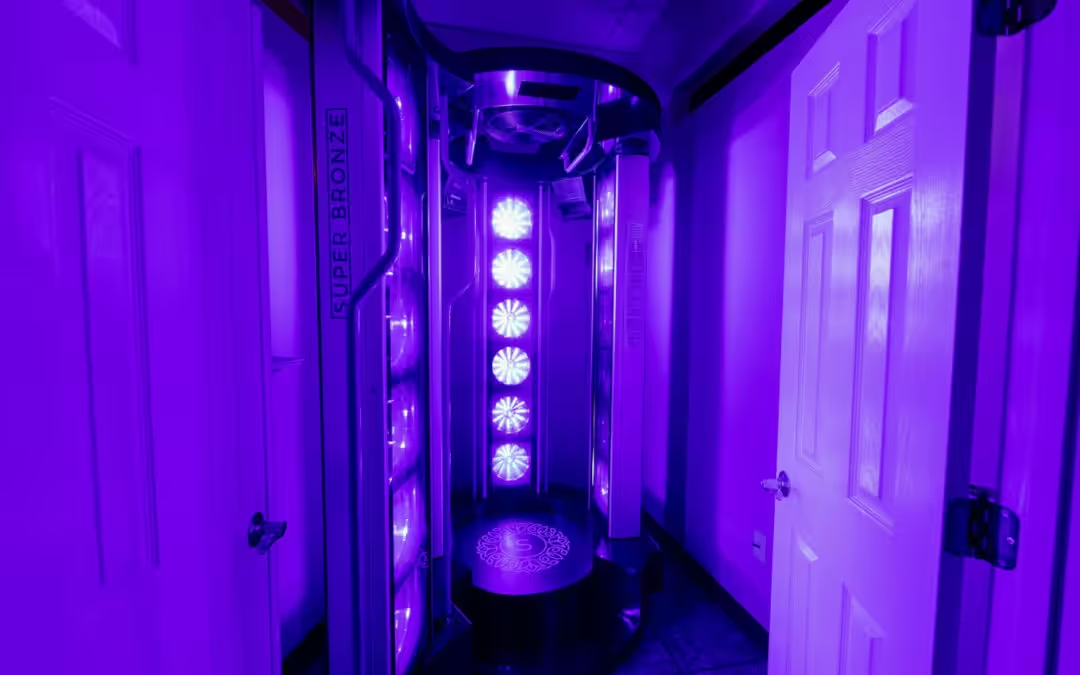
A stand up tanning bed is a vertical booth you tan in while standing, using the same UV lamps as a traditional bed but arranged around you instead of above and below. Standing keeps your skin from shifting or compressing the way it does when you lie down, which is the main reason the color tends to come out more even.
Stand Up Tanning Bed vs Lay Down
The short version: stand-up beds give more even coverage and shorter sessions, while lay-down beds are more relaxing and usually include a facial tanning unit. Here is how they compare.
| Feature | Stand Up Bed | Lay Down Bed |
| Coverage | Even; no pressure points; reaches sides and underarms | Can leave marks where skin presses the surface |
| Bulb power | About 160 to 200 watts | About 100 to 120 watts |
| Session length | Around 8 to 12 minutes | Longer, since the bulbs are weaker |
| Contact and hygiene | You touch only the handlebars, so less to sanitize | You lie on the surface, cleaned between users |
| Comfort | You stand for the session | You lie down and can relax |
| Facial tanning unit | Usually none | Usually included |
Your stance still decides the result, so a salon with trained staff who can set your position and time helps, like SunsUp Tan & Wellness Spa. Beds also come in different levels, which changes bulb strength and session length: learn what different level beds mean.
How to Use a Stand Up Tanning Bed: Step by Step
Position is what makes a stand-up tan even, so most of these steps are about where you stand.
- Remove makeup, jewelry, and any tight clothing that leaves marks, which helps you avoid tan lines and get the most even coverage.
- Put on the FDA-approved goggles the salon provides. Closing your eyes will not protect them.
- Step in and stand in the center with your feet about shoulder-width apart, so your inner legs and sides are not shaded.
- Grip the handlebars, set at about shoulder height, and keep your arms slightly raised so UV reaches your whole body.
- Start the timer, or let staff start it, then hold still. Moving around causes uneven color and more sweating.
- About halfway through, turn slightly or shift your stance so the same spots are not always facing away from the lamps.
- Step out, get dressed, and go. There is no bed surface to towel off.
How Long Should You Tan in a Stand Up Bed?
Most sessions run 8 to 12 minutes, and a first-timer should start at 3 to 4 minutes and build up as the skin adapts. Your exact time depends on your skin type and how often you tan; the chart below is a safe starting point.
| Skin Type | Week 1 (First Visit) | Week 2 | Week 3 | Week 4 |
| Type I (Very fair, burns easily) | Not recommended | Not recommended | Not recommended | Not recommended |
| Type II (Fair, sometimes burns) | 3-4 minutes | 5-6 minutes | 6-7 minutes | 7-8 minutes |
| Type III (Medium, tans gradually) | 5-6 minutes | 7-8 minutes | 8-9 minutes | 9-10 minutes |
| Type IV (Olive, tans easily) | 6-7 minutes | 8-9 minutes | 10 minutes | 10-12 minutes |
| Type V-VI (Dark, rarely burns) | 7-8 minutes | 10 minutes | 12 minutes | 12-15 minutes |
A Note on Type I Skin
Very fair skin that burns easily should skip UV tanning. The burn risk is high and an even tan is unlikely. A spray tan is the safer choice: it is UV-free, gives a natural glow, and lasts up to 7 days. For an all-natural spray tan that does not stink or stain, visit SunsUp Tan & Wellness Spa.
Stand Up Tanning Bed Tips for the Best Results
What you do before and after your session affects how deep your tan gets and how long it lasts.
Before your session:
- Exfoliate the day before to clear dead skin so your tan lasts longer. Our Bamboo Exfoliant also calms irritation and helps prevent breakouts.
- Skip regular lotions, perfume, and oils, which can block UV rays or irritate your skin.
- Apply a dedicated indoor tanning lotion instead, which boosts color and keeps skin moisturized. We use MR International, a salon-only formula built to develop deeper color while nourishing your skin.
After your session:
- Moisturize with a fragrance-free lotion to hold your tan longer. TriLuxe Lotion by REDLIGHT+ adds vitamins A, C, and E plus olive, shea butter, and coconut oil.
- Wait a few hours before showering if you used a bronzing lotion, so the color can set.
- Space sessions 24 to 48 hours apart to avoid overexposure.
FAQ
Why are my legs not tanning in a stand-up tanning bed?
Your legs sit farthest from the lamps and catch the UV at a shallower angle than your torso, so they tan slowest. Standing with your feet together makes it worse by shading your inner legs. Set your feet shoulder-width apart, and turn or reposition once partway through the session.
Do you need eye protection in a stand-up tanning bed?
Yes. Protective goggles are required by law in the U.S., and closing your eyes is not enough, because eyelids are too thin to block UV. Salons provide goggles at no charge, though many people bring their own.
Do you tan faster in a stand-up bed?
Usually, yes. Stand-up beds use stronger 160 to 200-watt lamps, against roughly 100 to 120 watts in a lay-down bed, so a session runs about 8 to 12 minutes instead of longer. If you are new or have sensitive skin, start at 3 to 4 minutes no matter which bed you use.
Is a Stand Up Tanning Bed Right for You?
A stand up tanning bed is worth it if you want even coverage, a quick session, and less contact with surfaces. It matters less which bed you pick than how you prep, where you stand, and how you care for your skin afterward. If you want staff who can set your position and time and point you to the right products, the team at SunsUp Tan & Wellness Spa can help.
Recent Comments