Even people who are already familiar with wellness services often mix up “red light,” “infrared,” “near infrared,” and “far infrared.” And it’s no wonder. The names sound similar, and both services are known for helping people feel good in different ways. For that reason, let’s see the Red Light Therapy vs Infrared Therapy comparison.
Key Takeaways
Choosing between red light therapy and infrared therapy ultimately comes down to how you want to feel during your session and what you want to focus on.
- Red light therapy supports surface-level skin goals and feels bright, gentle, and non-heated.
- Infrared therapy travels deeper into the body and offers warming, relaxing, and calorie-burning experiences.
- Red light is ideal for anyone looking to refresh the appearance of their skin without heat.
- Infrared is perfect for people who enjoy deeper warmth and full-body relaxation.
What is Red Light Therapy?
Red light therapy (RLT) is a non-invasive treatment that uses low-level wavelengths of visible red light to nudge your cells into “working smarter, not harder.”
How Does Red Light Therapy Work?
The core idea behind red light therapy is to stimulate the mitochondria. These little powerhouses in your cells respond to certain wavelengths of light by producing more ATP (your body’s cellular energy currency). More ATP means faster repair and healthier function.
People love to use this type of therapy for:
- Skin tone, texture, and collagen support
- Reducing redness or irritation near the surface
- Speeding up minor wound healing
- Hair and scalp treatments
- Reducing superficial inflammation
- Supporting general skin rejuvenation
Potential Benefits of Red Light Therapy
Many people book red light therapy because it supports several wellness goals at once, especially when they want something gentle, relaxing, and easy to fit into their routine.
- Skin appearance, tone, and clarity: Many notice their skin appears brighter, smoother, and more even-toned with consistent sessions. It’s frequently used to support concerns like visible stretch marks, uneven pigmentation, dark spots, or areas that feel dull or tired.
- Surface-firming and revitalizing effects: Because red light can encourage the skin to function at its best, many people use it to maintain a firmer, more lifted look.
- Supporting skin clarity: Many find it helpful for skin that’s breakout-prone or easily congested, as the light can support a clearer-looking complexion and help the surface look more balanced.
- Hair, nail, and overall vitality goals: Some people also enjoy red light therapy as part of routines aimed at supporting fuller-looking hair, healthier-looking nails, and a general sense of vitality.
- General comfort and ease: Many people describe feeling less tense or stiff after sessions, and they appreciate the gentle light for supporting everyday comfort without heat.
- Feeling more energized: Red light therapy is often chosen by those who want to feel more awake, refreshed, and naturally energized after their session.
Types of Red Light Therapy
Red light therapy comes in several forms, and the experience can feel very different depending on the type of device you use.
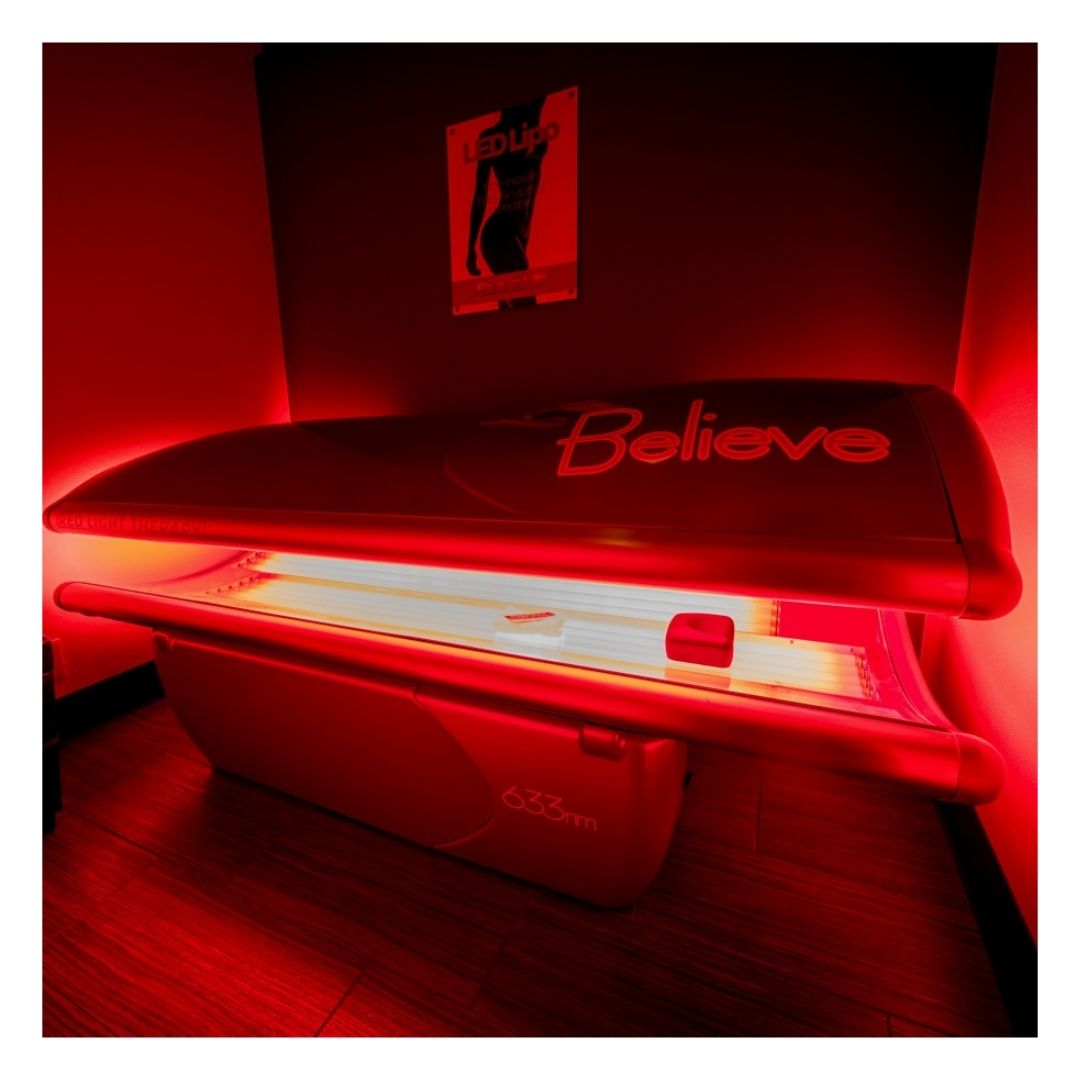
- Professional Red Light Therapy: These are the most powerful and most evenly distributed red light systems. Professional devices use panels or full-body units that surround you with bright, comfortable red light, giving your skin consistent exposure from head to toe.
- At-Home Red Light Devices: Home red light products range from handheld wands to panel systems. They’re convenient and great for maintaining a routine, but the light output is typically milder and more focused.
What is Infrared Therapy?
Infrared therapy uses wavelengths that sit beyond visible red light, which means that you don’t see anything happening, but your tissues definitely do.
How Does Infrared Therapy Work?
Infrared therapy still targets the same cellular machinery as red light: the mitochondria. The objective is identical. Encourage cells to operate more efficiently and produce usable energy faster. What changes is the wavelength range, and therefore where in the body the light is absorbed.
Infrared wavelengths are longer than visible red light, and longer wavelengths naturally travel farther into the body. For that reason, people like to use this type of therapy for:
- Muscle soreness and post-workout recovery
- Joint stiffness and chronic aches
- Improving circulation or warming up tissues
- Relaxation, stress relief, and sauna-style sweating
Potential Benefits of Infrared Therapy
People choose infrared therapy when they want a warm, restorative session that supports multiple wellness goals and feels deeply comforting from head to toe.
- Deep relaxation and stress relief: Infrared heat has a calming, body-heavy quality that helps melt away stress.
- Comfort for tight, fatigued, or overworked muscles: Because the heat reaches deeper layers of the body, infrared is often used to relieve everyday stiffness, post-workout tightness, or the built-up tension that comes from long days on your feet or long hours at a desk.
- Circulation and burning calories: The warmth naturally encourages increased circulation and can lead to a mild sweat, making it popular for those who enjoy sweat-based wellness sessions or want to feel lighter and less “puffy.”
- A soothing alternative to traditional saunas: People who find steam or very high heat uncomfortable often appreciate infrared’s smoother style of warmth.
Types of Infrared Therapy
Infrared therapy comes in several formats, and the experience can vary depending on how the infrared light is delivered.
Professional Infrared Devices: Professional infrared systems use controlled near-infrared or combined-spectrum panels that sit close to the body. These devices deliver deeper absorption than home units and offer an even, targeted warmth.
At-Home Infrared Devices: These include smaller panels, handheld devices, and portable infrared units. They’re convenient and accessible, though usually less powerful than professional systems.
Infrared Saunas
Infrared saunas are a popular alternative to traditional saunas. People choose this type of sauna because the body is directly heated instead of the air around you, which makes it more comfortable.
An infrared sauna can be:
- Full-Size Cabin Saunas: These are traditional, enclosed sauna-style units that use infrared panels to warm the body in a comfortable, room-like space.
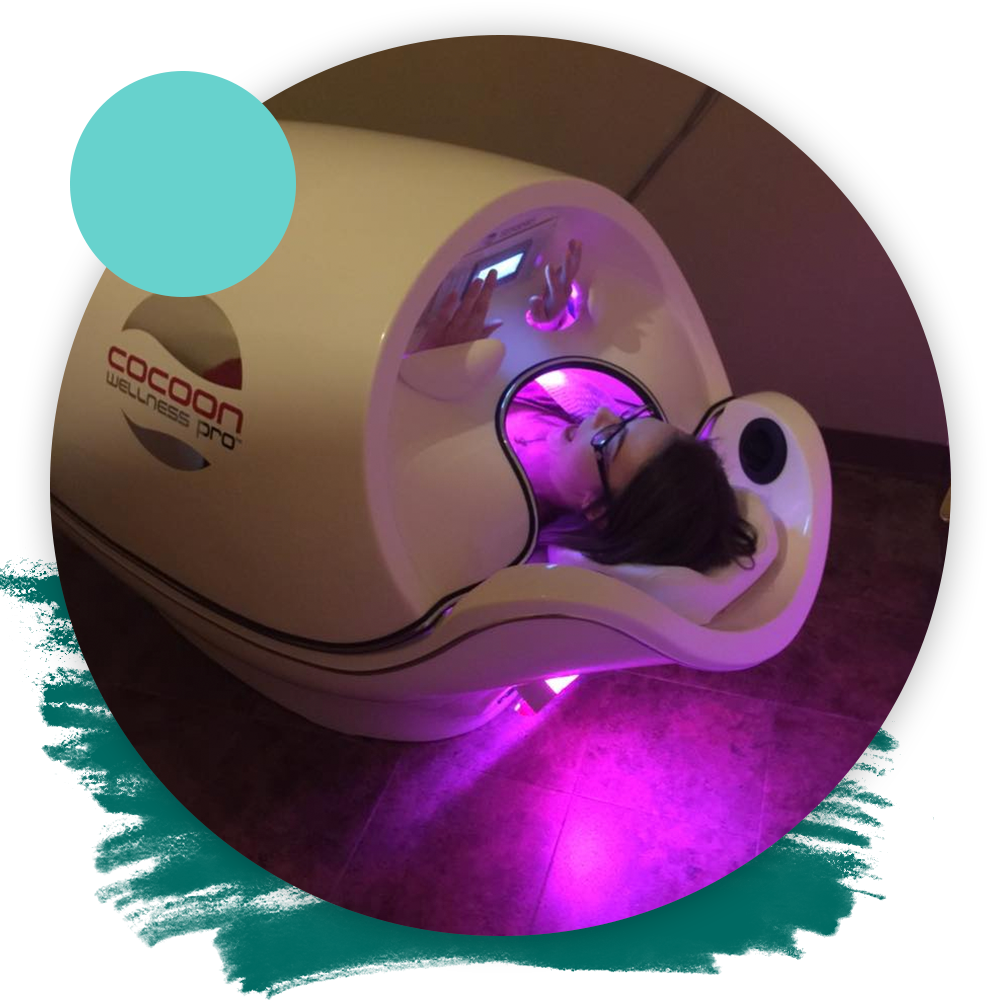
- Body Pod: These devices, like our Calorie-Burning Body Pod, use infrared heat, gentle vibration, and Himalayan salt to support circulation, promote relaxation, and enhance calorie burn.
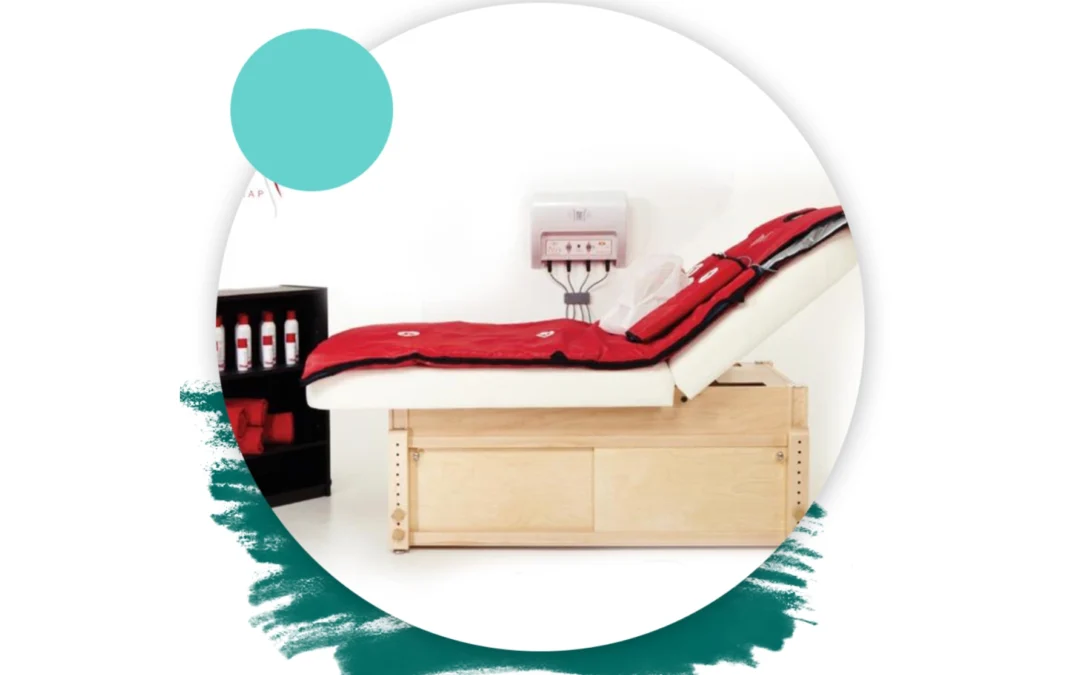
- Bodywraps: This type of treatment, like our Self-Service Infrared Bodywrap, uses the wrap that folds around the body to create a weighted-blanket feel while gentle infrared heat surrounds you. It’s great for rejuvenation, relaxation, and burning calories.
Red Light Therapy vs Infrared Therapy – Key Differences
| Category | Red Light Therapy | Infrared Therapy |
| Type of Light | Visible red light | Invisible near-infrared (NIR) or far-infrared (FIR) light |
| Where It’s Absorbed | Surface of the skin and upper layers | Deeper tissues, muscles, and connective layers |
| How It Feels | Bright, gentle, non-heat | Warm, soothing, “from-the-inside” heat |
| Best For | Skin tone, clarity, texture, superficial rejuvenation | Muscle comfort, deep relaxation, circulation support |
| Device Types | Panels, full-body beds, home wands | Professional panels, saunas, Body Pod, infrared bodywraps |
| Who It’s For | Anyone wanting a non-heat cosmetic boost | Anyone wanting deeper warmth and full-body relaxation |
What Does Red Light Therapy Feel Like?
Red light therapy has a surprisingly gentle feel. When you use a red light panel or full-body device, the first thing you’ll notice is the brightness. It’s warm in color but not warm in temperature. There’s no heat, no pressure, and no discomfort.
What Does Infrared Therapy Feel Like?
Infrared therapy feels completely different from red light therapy. Instead of brightness, you notice gentle and soothing warmth that builds gradually. Because infrared light travels deeper into the body, the heat feels more internal than surface-level. Most people describe the experience as deeply warming and relaxing.
Can You Combine Red Light and Infrared?
Yes, many people at SunsUp Tan & Wellness Spa choose to combine red light therapy with infrared-based services.
The two options support different wellness goals and affect the body in different ways, which makes them a natural match.
Red light is often used to enhance the look and feel of the skin, while infrared services such as the Body Pod or Infrared Bodywrap are popular for their warming, calorie-burning, and deeply relaxing qualities.
Please note: This information is for general wellness guidance only and is not medical advice. Before starting or combining any treatments, especially if you have health concerns or sensitivities to heat or light, please consult with your healthcare provider to ensure the services are appropriate for you.
FAQ
What is the difference between red light, near infrared, and far infrared?
Red light is a visible light that supports the surface layers of the skin. Near infrared is invisible and reaches deeper into the body, making it useful for deeper relaxation and tissue-level support. Far infrared is the warmest option and is commonly used in saunas and heat-based sessions because it creates a full-body warming effect.
Can these therapies be used year-round?
Yes. Both red light and infrared therapies are gentle and can be enjoyed in any season. Many people use red light therapy consistently throughout the year to support their skin, while infrared sessions are popular for warmth and relaxation during cooler months and for wellness routines year-round.
Does infrared therapy get uncomfortably hot?
Infrared therapy produces a gentle, gradual heat that most people find soothing. The warmth builds slowly rather than suddenly, which helps prevent the session from feeling overwhelming.
Will I sweat during infrared therapy?
Yes, especially if you choose a sauna-style infrared service or one of our calorie-burning options.
Recent Comments