
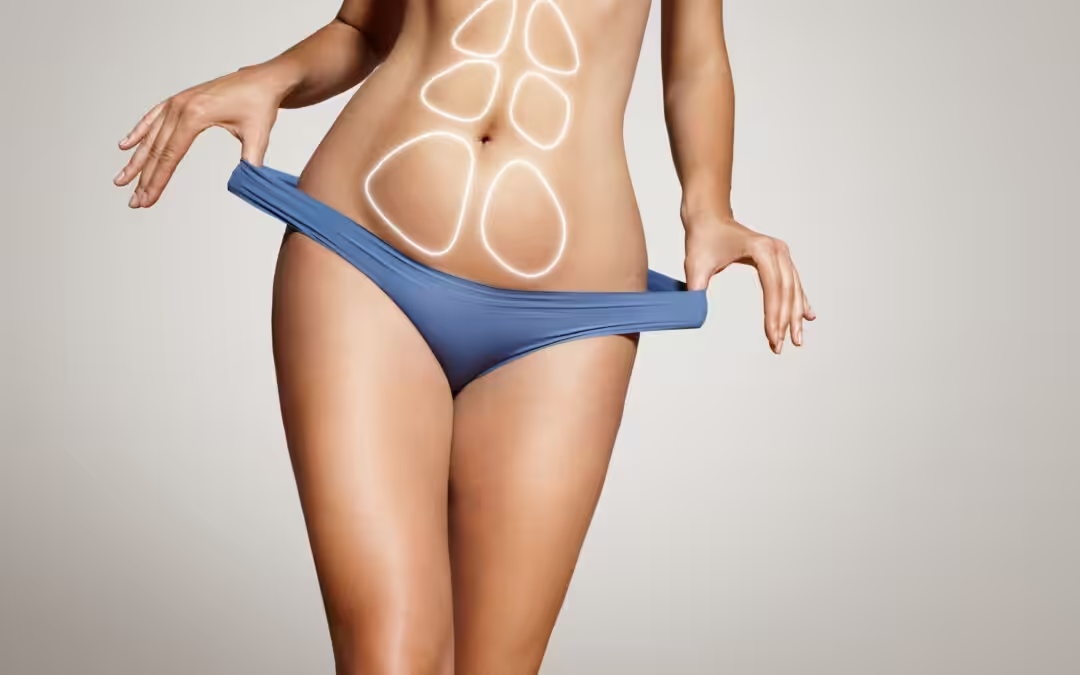
CoolSculpting freezes and permanently destroys targeted fat cells, while red light body sculpting uses light to temporarily alter fat-cell membranes so their contents can be released and processed by the lymphatic system. In this comparison, red light therapy refers specifically to body sculpting devices that use 635 nm red light for this purpose, rather than red light treatments used for skin, recovery, or other wellness goals.
Key Takeaways
- CoolSculpting destroys fat cells with controlled cooling, while 635 nm red light body sculpting releases stored contents so fat cells shrink but remain intact.
- CoolSculpting offers longer-lasting fat reduction with fewer treatments, while red light body sculpting typically requires multiple sessions.
- Red light body sculpting is gentle and requires no downtime. CoolSculpting also generally requires no downtime, but bruising, swelling, numbness, and the rare PAH complication can occur.
- CoolSculpting generally costs more per area, while red light body sculpting has a lower per-session cost that can add up with repeated treatments.
- CoolSculpting is better suited to a localized, pinchable bulge, while red light body sculpting is better for gradual contouring.
How Each Treatment Works?
One terminology point matters before comparing the two. “Red light therapy” can describe several different technologies. In this article, it refers specifically to 635 nm low-level light used for body contouring.
How CoolSculpting Works?
CoolSculpting uses cryolipolysis, commonly called fat freezing. An applicator delivers controlled cooling to a localized area of subcutaneous fat. Fat cells are particularly susceptible to cold, so the treatment is intended to injure and destroy them while avoiding freezing the skin.
After the cold treatment, the body gradually clears the affected cells through an inflammatory and immune response. This process occurs over the following weeks and months, which is why the change in the treated area develops gradually rather than immediately.
CoolSculpting targets localized fat to change the appearance of a specific area. It is a body-contouring treatment rather than a method for overall weight loss.
How Red Light Body Sculpting Works?
Our red light body sculpting treatment uses 635 nm light. The light temporarily changes the permeability of fat-cell membranes, which allows stored triglycerides to leave the cells. The fat cells decrease in volume but remain intact.
After their release, triglycerides are broken down into free fatty acids and glycerol and enter the bloodstream. Free fatty acids can then be used as fuel, including during exercise. Fat that is not used for energy reaches the liver, where it may be oxidized or processed again for storage. It is not known exactly how much is oxidized compared with how much is re-stored.
This is the key difference from CoolSculpting. Cryolipolysis damages fat cells so they can be cleared from the treated area, while 635 nm red light body sculpting releases stored contents from fat cells and reduces their volume without destroying them.
Here you can learn more about how body sculpting works. You may also want to see a body sculpting vs liposuction comparison.
Results You Can Actually Expect
CoolSculpting changes develop gradually as the body clears the affected cells. Results from 635 nm low-level light body sculpting are generally more modest, with additional treatments potentially needed to maintain the effect.
CoolSculpting Results
Research supports measurable reductions in the thickness of the treated fat layer, but those percentages should not be confused with total body-fat loss. One systematic review found average reductions of 14.7%-28.5% by caliper measurement and 10.3%-25.5% in fat-layer thickness measured by ultrasound.
Results also take time to develop. In one small study, ultrasound measurements showed a 20.4% reduction in the treated fat layer after two months and 25.5% after six months. The study illustrates how changes can continue developing for months after treatment rather than appearing immediately.
Red Light Body Sculpting Results
One randomized study using 635-680 nm LLLT reported a cumulative 2.15 cm reduction in waist girth after eight treatments over four weeks. Importantly, the researchers measured waist circumference; they did not demonstrate an equivalent percentage reduction in fat-layer thickness.
Another randomized trial using 635 nm LLLT reported reductions after six treatments by adding together changes measured at the waist, hips, and both thighs.
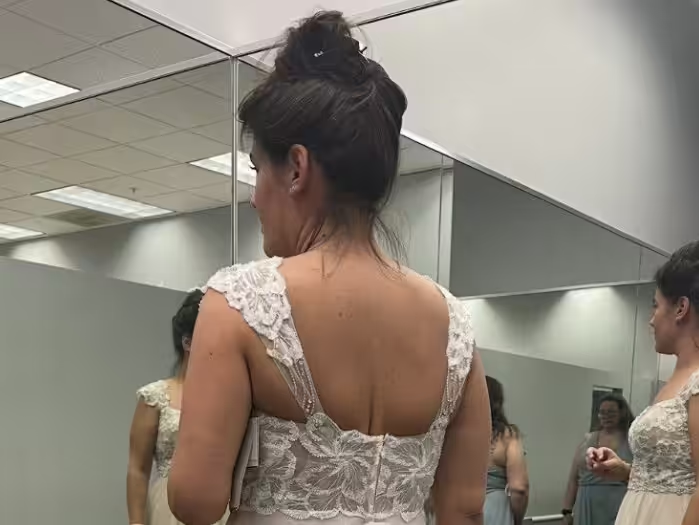
Here you can also see body sculpting before-and-after results that one of our clients achieved.

Comfort, Safety, and Downtime
Red light body sculpting is non-invasive and generally requires no downtime. CoolSculpting is also nonsurgical and usually does not require time away from normal activities, but temporary swelling, bruising, tenderness, numbness, and other local effects can occur.
What CoolSculpting Feels Like?
During CoolSculpting, an applicator pulls the targeted tissue into position and exposes it to controlled cooling. You may experience intense cold, pulling, discomfort, or numbness during the treatment.
Temporary CoolSculpting side effects can include:
- Redness and swelling
- Bruising
- Tenderness or discomfort
- Numbness or altered sensation
These effects do not necessarily prevent you from continuing your normal routine. However, numbness and other changes in sensation can persist after the appointment.
A much less common complication is PAH, or paradoxical adipose hyperplasia. Instead of getting smaller, the fatty tissue in the treated area grows and can develop into a firm, visible bulge.
PAH differs from ordinary post-treatment swelling in several important ways:
- It typically appears about two to five months after treatment.
- It does not resolve on its own.
- Corrective surgery may be required.
What Does Red Light Body Sculpting Feel Like?
The 635 nm body sculpting treatment discussed here does not use freezing or suction. There is no required recovery period, so you can return to normal activities after your session.
Compared with treatments that rely on heating or freezing tissue, pigment-related skin injury is less of a concern. This can make low-level red light suitable across a broad range of skin tones.
However, suitability across skin tones does not mean the treatment is appropriate for every person. Individual devices have their own contraindications, precautions, and treatment guidelines.
Cost Comparison
CoolSculpting generally has a higher upfront cost, while red light body sculpting may cost less per session but involves a series of treatments and potentially ongoing maintenance. For that reason, comparing the price of one appointment does not tell you which option will cost less overall.
What Affects CoolSculpting Cost?
Your total CoolSculpting cost depends on how much treatment is needed to address your desired areas. Multiple areas or additional applications can increase the final price, and some people undergo more than one treatment.
When reviewing a CoolSculpting quote, ask whether the price covers:
- One treatment area
- One application or cycle
- Multiple applicator placements
- Your complete plan
This is particularly important when treating larger areas or both sides of the body.
What Does Red Light Body Sculpting Cost at SunsUp Tan & Wellness Spa?
At SunsUp Tan & Wellness Spa, one body sculpting session costs $250. But it is more affordable with our membership. For example, one session costs 160 Club Points. With the Owners Club package, you get 200 club points for $200.
Keep in mind that you will probably need multiple treatments before seeing desired results. Check out this article for a detailed body sculpting cost breakdown.
When comparing red light therapy vs CoolSculpting cost, consider both your initial series and maintenance costs rather than looking only at the first appointment.
Which Body Areas Each Treats
Both treatments can contour multiple areas of the body, but they do not offer identical treatment coverage.
Common CoolSculpting Treatment Areas
CoolSculpting applicators are designed for areas like:
- Under the chin and jawline
- Upper arms
- Abdomen
- Flanks or love handles
- Back and bra fat
- Inner and outer thighs
- Under the buttocks
Common Red Light Body Sculpting Areas
Red light body sculpting can help slim and tone several areas, depending on the device and treatment protocol:
- Upper arms
- Hips
- Thighs
- Waist
- Neck
Neither Treatment Targets Visceral Fat
Both approaches are intended for subcutaneous fat, the fat located beneath the skin. They should not be presented as treatments for visceral fat, which sits deeper in the abdomen around the internal organs.
This distinction is particularly important when considering abdominal contouring:
- A soft, pinchable layer of abdominal fat may include subcutaneous fat that a body-contouring treatment can target.
- A firmer, protruding abdomen may be influenced substantially by deeper visceral fat, which these treatments do not target.
Which One Is Right for You?
CoolSculpting is generally better for a distinct and pinchable area of stubborn fat when you want fewer treatment visits and longer-lasting fat reduction. Red light body sculpting may be a better fit if you prefer gentler but repeated sessions and are comfortable with subtler results.
Neither treatment is intended for significant weight loss. They are body-contouring treatments designed to change specific areas rather than produce a major change on the scale.
Start With the Change You Want to See
CoolSculpting may be a better match if:
- You have a specific pocket of pinchable fat you want to reduce.
- You prefer fewer treatment visits.
- Permanently removing a portion of the treated fat cells is a priority.
- You are comfortable with temporary swelling, bruising, tenderness, or numbness.
- You understand and accept the rare risk of PAH.
Red light body sculpting may be a better match if:
- You want gradual contouring rather than targeted fat-cell destruction.
- You prefer a gentle, non-invasive treatment experience.
- You do not mind completing a series of sessions.
- You are willing to include maintenance treatments when needed.
- You are comfortable with more modest and variable changes.
Red Light Body Sculpting vs CoolSculpting Overview
| Aspect | Red Light Body Sculpting | CoolSculpting |
| Mechanism | 635 nm low-level light | Cryolipolysis through controlled cooling |
| What happens to fat cells | Stored contents are released and cells shrink, cells remain | Cold-damaged cells are gradually cleared |
| Permanence | Temporary. Maintenance may be needed | Treated fat cells are permanently removed |
| Treatment schedule | Series of repeated sessions, plus maintenance as needed | Often fewer treatment visits |
| Downtime | Generally none required | Generally none required, but local effects can persist |
| Discomfort | Gentle, non-invasive treatment | Cold, pulling, discomfort, and numbness. Rare PAH risk |
| Skin types | Broad applicability, subject to device precautions | Broad applicability, subject to standard precautions |
| Relative cost | Lower per session, but repeated and maintenance costs accumulate | Higher cost per area/application |
| Best for | Gradual, low-burden contouring | Targeted reduction of an appropriate stubborn fat bulge |
FAQ
Does Red Light Therapy Really Melt Fat?
No. Red light body sculpting does not melt or burn fat. With the 635 nm treatment discussed here, the light temporarily changes the permeability of fat-cell membranes so stored contents can be released. The fat cells shrink but remain in the body.
Can Fat Come Back After CoolSculpting?
The fat cells destroyed by CoolSculpting are permanently removed from the treated area. However, CoolSculpting does not remove every fat cell. If you gain weight afterward, the remaining fat cells can enlarge, which can change the contour of the treated area.
What Is the Downside of Red Light Body Sculpting?
The main downside is that results tend to be subtle and gradual compared with a treatment that destroys fat cells. Red light body sculpting also requires multiple sessions, and because the fat cells remain intact, maintenance may be needed to preserve the cosmetic effect.
Recent Comments